




10-Day The Magical Birds of Ecuador
TRIP OVERVIEW
The avian life in Ecuador is extremely rich, and the many locations where you can enjoy them are scattered around the country. Explore the most iconic birding spots in Ecuador, and of course, enjoy the heart of the Yasuni.
itinerary
Welcome to Quito! The largest, best-preserved colonial city of America, declared a UNESCO World Heritage Site in 1978. The city is considered the Cultural Capital of South America and is located on the equator in a valley at the foothills of the Pichincha volcano.
Depending on arrival time, you can spend your day exploring the old town of Quito and the surrounding area. ADVENTURE JOURNEYS can help you to organize a day trip (please request in advance). In the evening, one of our trip leaders will meet you at the hotel’s lobby for a welcome briefing at 18:00 hours.
At this time, we will discuss the details and questions you may have regarding the adventure. Our first day is an acclimation and information day. International Airport Flight transfer in is included.
At 6:15 / 6:30 AM, your driver will collect you from your hotel. We’ll start driving along the Calacali–Nanegalito road with colourful landscapes and ever-changing vistas all the way. At km 52, we will turn left onto the secondary road, which will take us for about 30 more minutes to Bellavista Lodge, perched at the top of the Tandayapa Valley.
Arrival at Bellavista. Y before going for breakfast. 09:30 a.m. Discovery hike into Bellavista Reserve´s forest! Your guide will choose the best trails and hike options, based on weather and trail conditions. After two or more hours of an easy and very educational hike, you are back in the lodge for lunch. Then we continue to Refugio Aves de la Paz.
3:30 pm-6:00 pm: We begin with a short walk for birding and photography to the Andean Cock-of-the-rock Lek and other birds, including Tanagers, Quetzals, and Toucans.
6:30 pm: Dinner will be served at the Birding Lodge in Refugio Paz de las Aves. We can accommodate special diets.
8 pm: The birdwatching and photography tour includes an evening walk to look for owls close to the lodge.
5:50 am: The first morning for birding and photography will include a cup of coffee with a light snack.
6:15 a.m.: If the first day wasn’t a successful photography session with the Andean Cock-of-the-rock, we will try again this morning. Otherwise, we will observe other birds attracted to the insects that flock to our lights near the lodge.
7:30 a.m.: Angel or Rodrigo will guide us to a series of places to see and photograph Antpittas and other birds.
10 a.m.: After observing the different birds, we will serve breakfast on our covered, outdoor patio with a beautiful view and access to our hummingbird garden. Breakfast includes fruit, bolón, empanada, coffee, & milk.
Before noon, we will make our way to San Tadeo, which is another beautiful tanager and hummingbird garden owned by Rolando, a member of the local community who has worked very hard to transform the northwest as a birding epicenter.
There are some very interesting species to be watched here, like the Beryl Spangled Tanager and Black Capped Tanager, to name a few. All very hard to find anywhere else.
It is also a great place for hummingbirds with some new species here, it is beautiful to watch the purple velvet coronet take its regular baths at the fountain, red headed barbets show up frecuently and with a lot of luck linear woodpecker will visit us after around one and a half hour we will make our way to Milpe reserve and bird sanctuary, Milpe, at 1100 meters altitude, is birders paradise with many Choco endemic species and well-kept trails to look for Club-winged and Golden Manakin during their season, as well as the elusive and endangered Umbrella Bird.
This is for sure “the” place to find the endemic Choco Toucan as well as Pale-mandibled Aracari, Chestnut-mandibled Toucan, and about 16 tanager species, some endemic. At Milpe, we will enjoy our lunch and stay at this beautiful reserve until around 5 pm.
From Mindo, we will go to Silanche Bird Reserve, an important site—one of the last remaining accessible forest remnants found in this key habitat—situated in hilly lowland forest at an altitude between 325-410 m.a.s.l. The main feature at Río Silanche is its incredible birding: mixed species foraging flocks, packed with many important Chocó regional endemic species, bombard the visitor all day long without a break.
Many of these bird species are otherwise difficult to find without arranging a logistically far more complicated expedition to Esmeraldas province or even Colombia: Purple-chested Hummingbird, Chocó Trogon, Double-banded Graytail, Moustached/Griscom’s Antwren, Stub-tailed Antbird, Black-tipped Cotinga, Slate-throated Gnatcatcher, Scarlet-breasted Dacnis, Scarlet-and-white Tanager, Blue-whiskered Tanager.
Then we continue to Amagusa Reserve, where they have set up a small but nice hummingbird garden with a few well-visited feeders that attract some of the sought-after choco endemic hummingbirds like the Empress Brilliant, Velvet-purple Coronet, Violet-tailed Sylph, Brown Inca, Purple-bibbed Whitetip, and White-wiskered Hermit. The hummingbird garden also has a shelter where you can comfortably look at hummingbirds even if it is raining.
Some of the local tanagers are also being attracted to feeders, so you will be able to see and photograph more of the choco endemics like Glistening-green Tanager and the Black-chinned Mountain Tanager. They also have other colorful tanagers that visit the feeders, like the Golden-naped Tanager, Golden Tanager, Flame-faced Tanager, and others.
Today, we will want to rise early and get on our way since we have a variety of habitats to explore. Our drive to Antisana Reserve. The Andean Condor lookout, where you’ll have very high chances to admire our national bird in flight, gliding high up on thermals with splendor and elegance.
This is one of the most magnificent sights in the bird world. A moment of pure connection to the Andean nature. Later, we’ll continue to explore Antisana National Park, where, with the aim of a good spotting scope, I will bring to your eyes some of the most representative species found within this important reserve.
Later, we’ll continue to “Mica Cocha” lake. Here we’ll take a hike to scan the lake shore for Slate-colored Coots, Andean Teals, Andean Ruddy Ducks, and Yellow-billed Pintails, Silvery Grebe, among others.
After a very productive morning, you’ll drive back for lunch to Tambo Condor, where, on top of serving delicious food, you’ll have a privileged view of the Condor’s cliffs and also have the opportunity to admire several species of hummingbirds.
Today, we will want to rise early and get on our way since we have a variety of habitats to explore. Our drive to Guango Lodge will initially lead us through the drier central valley, where we will pass through a mix of agricultural zones and native chaparral forests before rising steeply to the high and (often) windswept paramo.
Among the many bird possibilities, we will be particularly on the lookout for Andean Condor (sometimes hard), Carunculated Caracara, Andean Gull, Black-tailed Trainbearer, Scrub & Blue-and-yellow Tanagers, and Southern Yellow-Grosbeak. If there were a day to have your camera ready, this would be it. On clear days, the scenery is spectacular, with superb views of the snow-capped Volcán Antisana, and seemingly endless high Andean mountain-scapes harboring a backdrop of textures that make for an unforgettable birding setting.
This area, known as the Papallacta Pass by birders, is rich in paramo birdlife. With the proper weather, you can expect to see some of the following: Rufous-bellied Seedsnipe, Ecuadorian Hillstar, Tawny Antpitta, Many-striped Canastero, White-chinned Thistletail, Red-rumped Bush-Tyrant, Black-billed Shrike-Tyrant, Brown-backed Chat-Tyrant, some interesting seedeaters, and even Giant Conebill (with a bit of luck, up in the Polylepis woodlands). The Papallacta Pass is right on the continental divide. Once we finish up with our paramo birding, we will work our way down the east slope – Amazonian drainage now – towards Guango Lodge.
On the way, we will pass through some beautiful high-elevation temperate forests where we will have a chance to stop and soak in this birdy zone; some of the possibilities include Black-chested Buzzard-Eagle, Viridian Metaltail, Red-crested Cotinga, Black-backed Bush-Tanager, just to name a very few. We aim to arrive at Guango Lodge for a hot, sit-down lunch, where the hummingbird feeders will be dripping with species such as Tourmaline Sunangel, Sword-billed Hummingbird, and White-bellied Woodstar.
After lunch, we’ll devote our afternoon to birding on the trails and spectacular hummingbird feeders at Guango Lodge. On the grounds at Guango, we frequently run into some of the best temperate forest flocks on any of our tours in Ecuador; in a matter of minutes, it isn’t uncommon to see Bar-bellied Woodpecker, White-banded Tyrannulet, Blue-backed Conebill, Black-capped and Black-eared Hemispingus, Slaty and Pale-naped Brush-Finch, Gray-hooded Bush-Tanager, several species of mountain-tanager, and even Plushcap. We will always have our eye out for other particularly local or aesthetic highlights, and Gray-breasted Mountain-Toucan and Mountain Avocetbill are among them.
This morning we’ll take a drive around 4 hours to the town of Coca, gateway to the Amazon, whence in 1541 Francisco de Orellana set sail on a locally constructed brigantine and made the first navigation to the Atlantic.
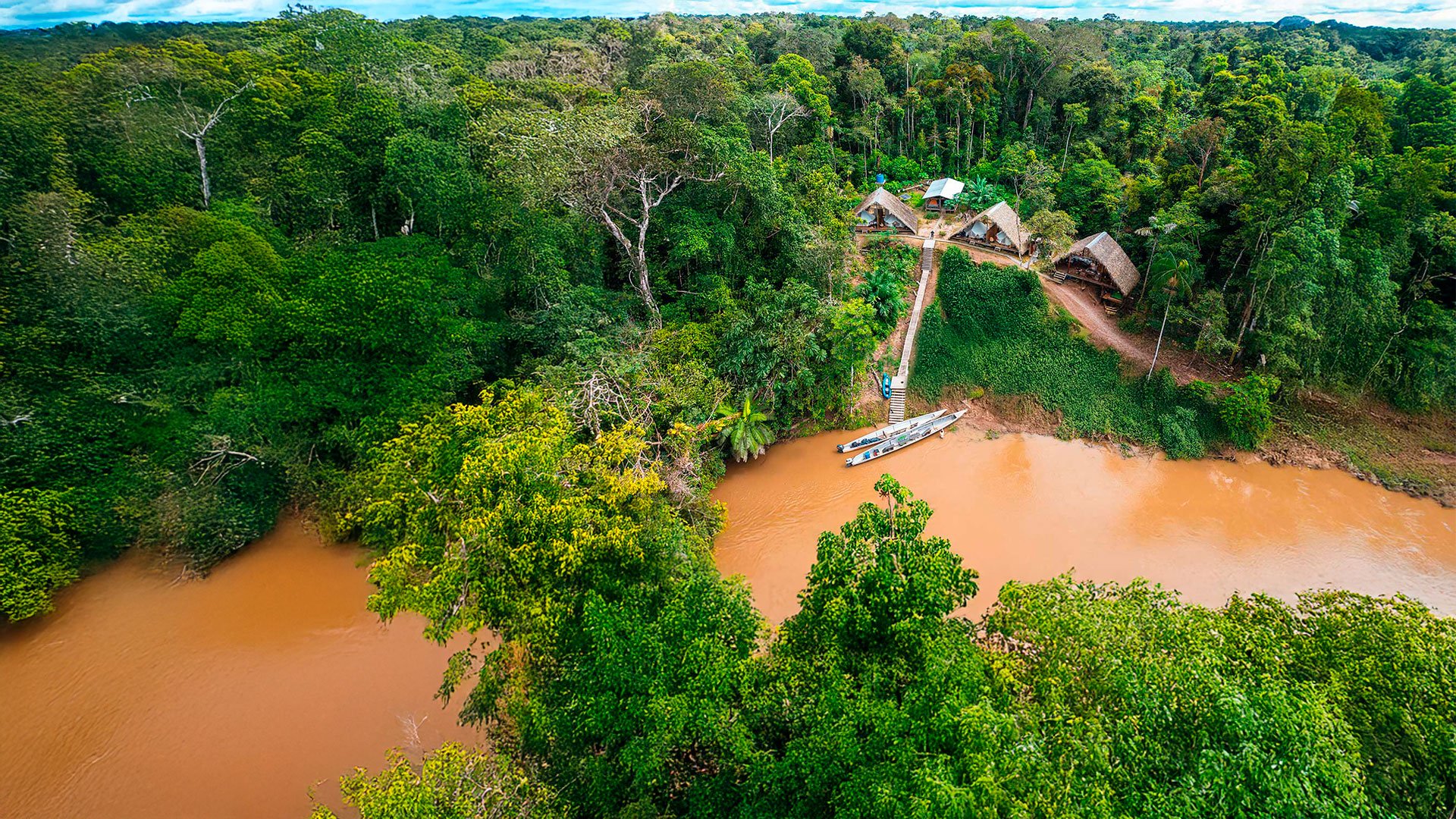
Begin your adventure in El Coca, where you’ll meet your tour leader before heading down the Auca Road toward the Shiripuno River. After a two-hour drive, board a canoe for a scenic ride deep into the rainforest. Along the way, watch for monkeys, colorful birds, and other wildlife as the jungle comes to life around you.
Upon arrival at WAO Kamp, settle and enjoy a warm welcome from our staff.
Later in the afternoon, explore the Jacamar Trail, a prime spot for birdwatching. Keep an eye out for species like the Great Jacamar, White Hawk, and Black-faced Hawk, often spotted among mixed flocks.
Spend the evening immersed in the heart of Yasuni at WAO Kamp.
Rise early for a full-day birding expedition along the Cotinga Trail, one of the most rewarding routes for serious birders. This trail is ideal for spotting the Black-necked Red Cotinga, the dazzling Fiery Topaz, and both Green and Olive Oropendolas. The area is also frequented by macaws, fruit eaters, and a variety of colorful passerines.
The trail goes through habitats ideal for encountering rare canopy species. You might spot the elusive Pavonine Quetzal or a roosting Rufous Potoo.
You’ll move at your own pace, with meals adjusted to suit the day’s sightings and activity.
Return to WAO Kamp to rest and review the day’s highlights, surrounded by the sounds of the rainforest.
Start the day with an early morning canoe ride downriver, scanning the banks for different species. You’ll most likely spot the Agami Heron, Sunbittern, King Vulture, and the striking Red-and-green Macaw.
Upon arrival at El Mirador, spend the day exploring its trails and lagoon areas. In the surrounding rich habitats, birders may encounter a variety of forest dwellers. It is the perfect place to spot the Pavonine Quetzal and the Black-banded Owl.
The lookout point offers chances to spot Harpy Eagle, Crested Eagle, King Vulture, and cotingas moving through the upper canopy.
After a full day of exploration, return to WAO Kamp by canoe in the late afternoon, where the forest settles into dusk and the night chorus begins.
Rise early for a hearty breakfast at 4:30 a.m., then set off on the peaceful canoe ride back upstream. Enjoy the final moments to spot birds and soak in the sounds of the rainforest awakening.
Pack your bags, but leave your heart — the forest will be waiting for your return.
Today we’ll head back to Coca, and our trip will end, and you will have your International departure. Take with you your memories and photos and leave a piece of your heart, as you will want to return to Ecuador soon to experience more of this enchanted land.
We wish you a “buen viaje”! International Flight Transfer is included.
Welcome to Quito! The largest, best-preserved colonial city of America, declared a UNESCO World Heritage Site in 1978. The city is considered the Cultural Capital of South America and is located on the equator in a valley at the foothills of the Pichincha volcano.
Depending on arrival time, you can spend your day exploring the old town of Quito and the surrounding area. ADVENTURE JOURNEYS can help you to organize a day trip (please request in advance). In the evening, one of our trip leaders will meet you at the hotel’s lobby for a welcome briefing at 18:00 hours.
At this time, we will discuss the details and questions you may have regarding the adventure. Our first day is an acclimation and information day. International Airport Flight transfer in is included.
At 6:15 / 6:30 AM, your driver will collect you from your hotel. We’ll start driving along the Calacali–Nanegalito road with colourful landscapes and ever-changing vistas all the way. At km 52, we will turn left onto the secondary road, which will take us for about 30 more minutes to Bellavista Lodge, perched at the top of the Tandayapa Valley.
Arrival at Bellavista. Y before going for breakfast. 09:30 a.m. Discovery hike into Bellavista Reserve´s forest! Your guide will choose the best trails and hike options, based on weather and trail conditions. After two or more hours of an easy and very educational hike, you are back in the lodge for lunch. Then we continue to Refugio Aves de la Paz.
3:30 pm-6:00 pm: We begin with a short walk for birding and photography to the Andean Cock-of-the-rock Lek and other birds, including Tanagers, Quetzals, and Toucans.
6:30 pm: Dinner will be served at the Birding Lodge in Refugio Paz de las Aves. We can accommodate special diets.
8 pm: The birdwatching and photography tour includes an evening walk to look for owls close to the lodge.
5:50 am: The first morning for birding and photography will include a cup of coffee with a light snack.
6:15 a.m.: If the first day wasn’t a successful photography session with the Andean Cock-of-the-rock, we will try again this morning. Otherwise, we will observe other birds attracted to the insects that flock to our lights near the lodge.
7:30 a.m.: Angel or Rodrigo will guide us to a series of places to see and photograph Antpittas and other birds.
10 a.m.: After observing the different birds, we will serve breakfast on our covered, outdoor patio with a beautiful view and access to our hummingbird garden. Breakfast includes fruit, bolón, empanada, coffee, & milk.
Before noon, we will make our way to San Tadeo, which is another beautiful tanager and hummingbird garden owned by Rolando, a member of the local community who has worked very hard to transform the northwest as a birding epicenter.
There are some very interesting species to be watched here, like the Beryl Spangled Tanager and Black Capped Tanager, to name a few. All very hard to find anywhere else.
It is also a great place for hummingbirds with some new species here, it is beautiful to watch the purple velvet coronet take its regular baths at the fountain, red headed barbets show up frecuently and with a lot of luck linear woodpecker will visit us after around one and a half hour we will make our way to Milpe reserve and bird sanctuary, Milpe, at 1100 meters altitude, is birders paradise with many Choco endemic species and well-kept trails to look for Club-winged and Golden Manakin during their season, as well as the elusive and endangered Umbrella Bird.
This is for sure “the” place to find the endemic Choco Toucan as well as Pale-mandibled Aracari, Chestnut-mandibled Toucan, and about 16 tanager species, some endemic. At Milpe, we will enjoy our lunch and stay at this beautiful reserve until around 5 pm.
From Mindo, we will go to Silanche Bird Reserve, an important site—one of the last remaining accessible forest remnants found in this key habitat—situated in hilly lowland forest at an altitude between 325-410 m.a.s.l. The main feature at Río Silanche is its incredible birding: mixed species foraging flocks, packed with many important Chocó regional endemic species, bombard the visitor all day long without a break.
Many of these bird species are otherwise difficult to find without arranging a logistically far more complicated expedition to Esmeraldas province or even Colombia: Purple-chested Hummingbird, Chocó Trogon, Double-banded Graytail, Moustached/Griscom’s Antwren, Stub-tailed Antbird, Black-tipped Cotinga, Slate-throated Gnatcatcher, Scarlet-breasted Dacnis, Scarlet-and-white Tanager, Blue-whiskered Tanager.
Then we continue to Amagusa Reserve, where they have set up a small but nice hummingbird garden with a few well-visited feeders that attract some of the sought-after choco endemic hummingbirds like the Empress Brilliant, Velvet-purple Coronet, Violet-tailed Sylph, Brown Inca, Purple-bibbed Whitetip, and White-wiskered Hermit. The hummingbird garden also has a shelter where you can comfortably look at hummingbirds even if it is raining.
Some of the local tanagers are also being attracted to feeders, so you will be able to see and photograph more of the choco endemics like Glistening-green Tanager and the Black-chinned Mountain Tanager. They also have other colorful tanagers that visit the feeders, like the Golden-naped Tanager, Golden Tanager, Flame-faced Tanager, and others.
Today, we will want to rise early and get on our way since we have a variety of habitats to explore. Our drive to Antisana Reserve. The Andean Condor lookout, where you’ll have very high chances to admire our national bird in flight, gliding high up on thermals with splendor and elegance.
This is one of the most magnificent sights in the bird world. A moment of pure connection to the Andean nature. Later, we’ll continue to explore Antisana National Park, where, with the aim of a good spotting scope, I will bring to your eyes some of the most representative species found within this important reserve.
Later, we’ll continue to “Mica Cocha” lake. Here we’ll take a hike to scan the lake shore for Slate-colored Coots, Andean Teals, Andean Ruddy Ducks, and Yellow-billed Pintails, Silvery Grebe, among others.
After a very productive morning, you’ll drive back for lunch to Tambo Condor, where, on top of serving delicious food, you’ll have a privileged view of the Condor’s cliffs and also have the opportunity to admire several species of hummingbirds.

Today, we will want to rise early and get on our way since we have a variety of habitats to explore. Our drive to Guango Lodge will initially lead us through the drier central valley, where we will pass through a mix of agricultural zones and native chaparral forests before rising steeply to the high and (often) windswept paramo.
Among the many bird possibilities, we will be particularly on the lookout for Andean Condor (sometimes hard), Carunculated Caracara, Andean Gull, Black-tailed Trainbearer, Scrub & Blue-and-yellow Tanagers, and Southern Yellow-Grosbeak. If there were a day to have your camera ready, this would be it. On clear days, the scenery is spectacular, with superb views of the snow-capped Volcán Antisana, and seemingly endless high Andean mountain-scapes harboring a backdrop of textures that make for an unforgettable birding setting.
This area, known as the Papallacta Pass by birders, is rich in paramo birdlife. With the proper weather, you can expect to see some of the following: Rufous-bellied Seedsnipe, Ecuadorian Hillstar, Tawny Antpitta, Many-striped Canastero, White-chinned Thistletail, Red-rumped Bush-Tyrant, Black-billed Shrike-Tyrant, Brown-backed Chat-Tyrant, some interesting seedeaters, and even Giant Conebill (with a bit of luck, up in the Polylepis woodlands). The Papallacta Pass is right on the continental divide. Once we finish up with our paramo birding, we will work our way down the east slope – Amazonian drainage now – towards Guango Lodge.
On the way, we will pass through some beautiful high-elevation temperate forests where we will have a chance to stop and soak in this birdy zone; some of the possibilities include Black-chested Buzzard-Eagle, Viridian Metaltail, Red-crested Cotinga, Black-backed Bush-Tanager, just to name a very few. We aim to arrive at Guango Lodge for a hot, sit-down lunch, where the hummingbird feeders will be dripping with species such as Tourmaline Sunangel, Sword-billed Hummingbird, and White-bellied Woodstar.
After lunch, we’ll devote our afternoon to birding on the trails and spectacular hummingbird feeders at Guango Lodge. On the grounds at Guango, we frequently run into some of the best temperate forest flocks on any of our tours in Ecuador; in a matter of minutes, it isn’t uncommon to see Bar-bellied Woodpecker, White-banded Tyrannulet, Blue-backed Conebill, Black-capped and Black-eared Hemispingus, Slaty and Pale-naped Brush-Finch, Gray-hooded Bush-Tanager, several species of mountain-tanager, and even Plushcap. We will always have our eye out for other particularly local or aesthetic highlights, and Gray-breasted Mountain-Toucan and Mountain Avocetbill are among them.

This morning we’ll take a drive around 4 hours to the town of Coca, gateway to the Amazon, whence in 1541 Francisco de Orellana set sail on a locally constructed brigantine and made the first navigation to the Atlantic.
Begin your adventure in El Coca, where you’ll meet your tour leader before heading down the Auca Road toward the Shiripuno River. After a two-hour drive, board a canoe for a scenic ride deep into the rainforest. Along the way, watch for monkeys, colorful birds, and other wildlife as the jungle comes to life around you.
Upon arrival at WAO Kamp, settle and enjoy a warm welcome from our staff.
Later in the afternoon, explore the Jacamar Trail, a prime spot for birdwatching. Keep an eye out for species like the Great Jacamar, White Hawk, and Black-faced Hawk, often spotted among mixed flocks.
Spend the evening immersed in the heart of Yasuni at WAO Kamp.

Rise early for a full-day birding expedition along the Cotinga Trail, one of the most rewarding routes for serious birders. This trail is ideal for spotting the Black-necked Red Cotinga, the dazzling Fiery Topaz, and both Green and Olive Oropendolas. The area is also frequented by macaws, fruit eaters, and a variety of colorful passerines.
The trail goes through habitats ideal for encountering rare canopy species. You might spot the elusive Pavonine Quetzal or a roosting Rufous Potoo.
You’ll move at your own pace, with meals adjusted to suit the day’s sightings and activity.
Return to WAO Kamp to rest and review the day’s highlights, surrounded by the sounds of the rainforest.
Start the day with an early morning canoe ride downriver, scanning the banks for different species. You’ll most likely spot the Agami Heron, Sunbittern, King Vulture, and the striking Red-and-green Macaw.
Upon arrival at El Mirador, spend the day exploring its trails and lagoon areas. In the surrounding rich habitats, birders may encounter a variety of forest dwellers. It is the perfect place to spot the Pavonine Quetzal and the Black-banded Owl.
The lookout point offers chances to spot Harpy Eagle, Crested Eagle, King Vulture, and cotingas moving through the upper canopy.
After a full day of exploration, return to WAO Kamp by canoe in the late afternoon, where the forest settles into dusk and the night chorus begins.
Rise early for a hearty breakfast at 4:30 a.m., then set off on the peaceful canoe ride back upstream. Enjoy the final moments to spot birds and soak in the sounds of the rainforest awakening.
Pack your bags, but leave your heart — the forest will be waiting for your return.
Today we’ll head back to Coca, and our trip will end, and you will have your International departure. Take with you your memories and photos and leave a piece of your heart, as you will want to return to Ecuador soon to experience more of this enchanted land.
We wish you a “buen viaje”! International Flight Transfer is included.
GALLERY
INCLUSIONS
What's Included?
- Airport reception and assistance in Quito and Coca Transfers airport-dock-airport in Coca.
- Canoe ride down the Shiripuno River towards the lodge and back.
- Camping Accommodation. Excursions with native & naturalist bilingual guides (Share).
- Activity daily briefing. Welcome and farewell mocktail. All meals.
- Purified water from the dispenser.
- American coffee, herbal tea, and snacks at the coffee station.
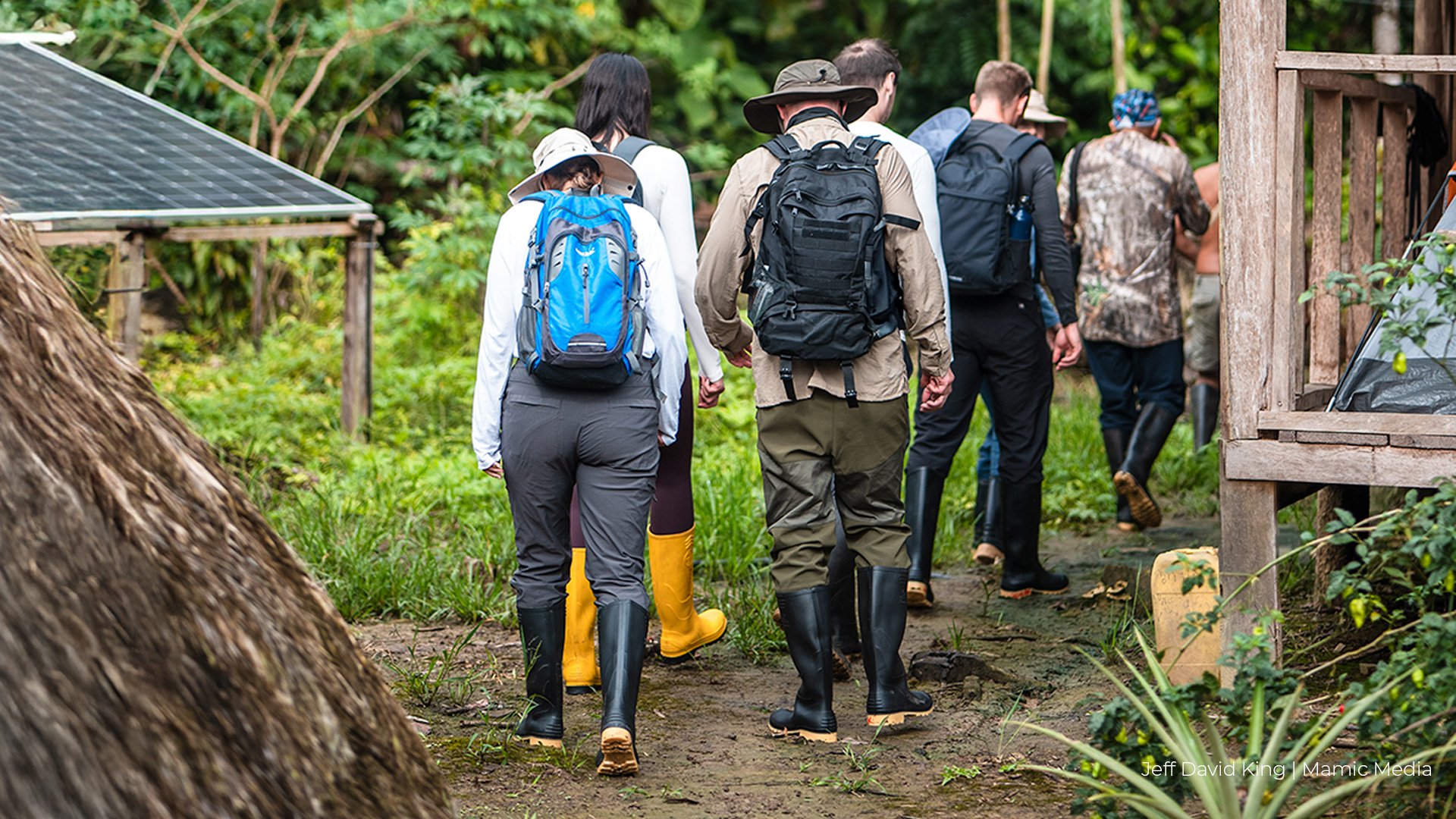
- Rubber boots are provided during your stay.
- Use of Kayaks.
- Umbrella and water poncho
What is not Included?
- Air tickets. Soft beverages: juices, sodas, sparkling water.
- Alcoholic Beverages.
- Tips for guides and staff (the suggested tip is $10 to the guide and $15 to the staff per passenger) Travel and health insurance.
- Souvenirs. Personal Expenses.
- Any other item not specified above.
- Yoga sessions (only available upon request).
Contact Us
Start Your Journey
Don’t miss the opportunity to enjoy the Wao Experience. Contact us and discover the beauty of the heart of the Yasuni.